When leaders from across the tutoring ecosystem gather in one place, themes emerge. At the Accelerate and ProvenTutoring Convening, the conversation was less about whether tutoring works (it does!) and more about how to execute it well at scale. What follows are four themes that feel bigger than any single event and point to the next phase of this work.
- The Evidence is Clear. Now Scaling is the Work.
In the opening plenary, we heard a clear message: we are past asking whether high-dosage tutoring works. Across more than 30 randomized controlled trials and implementation in 29 states, tutoring has demonstrated reliable impact across subjects, grades, and delivery models.
The frontier has shifted. The real questions now are about driving up dosage, improving our understanding of cost, and finding sustainable ways to embed tutoring into how schools do business.
As Jens Ludwig put it, “Don’t be greedy.” We found something that works. We can keep tinkering, but the most important job now is to scale it well.
- Coherence, Implementation and Infrastructure Matter More Than Any Single Program
Sessions going deep on state level work in Arkansas and Florida showed that strong policy is necessary but not sufficient. Tutoring scales best when it is integrated into core instruction, MTSS, and accountability systems rather than operating as a parallel add-on.
Data infrastructure emerged as a recurring theme. In two sessions focused on DATAS, leaders emphasized that session-level data and shared standards are becoming baseline expectations. Visibility into who is getting tutoring, how often, and with what results is essential to sustaining both quality and funding.
- Innovation Must Be Paired With Rigor
Sessions focused on the impact of early literacy tutoring programs reinforced that multiple early literacy models can drive impact when core design principles are in place. Evidence plays different roles at different stages, from refining design to proving impact to improving at scale.
At the same time, From Prototype to Practice: Lessons from AI Math Tutoring in Real Classrooms underscored how early we still are in understanding AI’s role in tutoring and personalized learning. Every panelist was focused on improving math outcomes, but the tools they built, the approaches they took, and the theories behind them varied. That diversity is a sign of a conversation that is far from settled. And it served as a reminder that impressive technology is not the same as impact. Whether AI tutoring delivers for students, especially those furthest from opportunity, will depend on the implementation conditions surrounding it: educator readiness, integration into instruction, and a commitment to evidence over hype.
- This Is a Community That Is Choosing to Scale What Works
Across sessions, one theme stood out: the sector is maturing. Providers are proving themselves across many different contexts. States are codifying tutoring into policy. Researchers are answering high leverage questions with quality. Districts are integrating tutoring into how they do business (including changing master schedules!). Funders are sharpening expectations around evidence and sustainability. And most importantly, more and more kids are accessing an intervention that helps them learn.
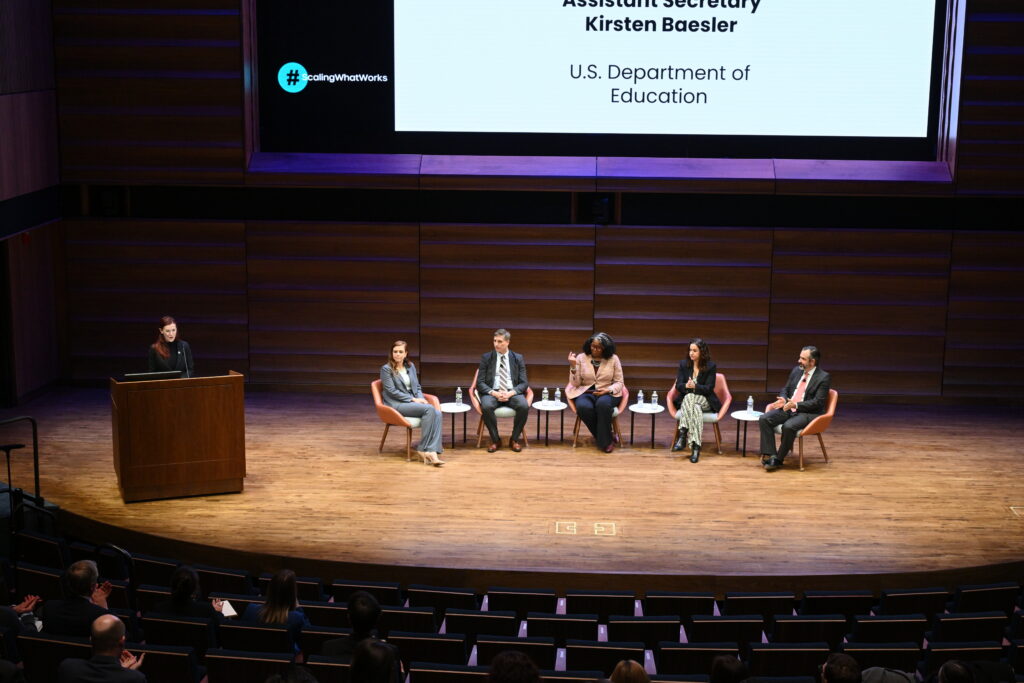
Our closing plenary featured Assistant Secretary of Education Kirsten Baesler, who said, “High-dosage tutoring has evolved from a concept into a proven, evidence-based strategy and then into a reality for thousands of students in thousands of schools. It is a foundational strategy for improving student outcomes.” She previewed a panel of leaders working on state-level multi-year projects.
As Linda Jacobson chronicled in The 74 Million, there is real momentum. Tutoring is entering a new phase. Durable change requires shared standards, accountability, political will, and continued collaboration across roles.
The Next Five Years
The next five years represent a rare window. We have stronger evidence than any other education intervention. We have state-level action. We have public demand.
The next phase is simple to understand, but hard to execute: scale access while protecting dosage.
Build the infrastructure that makes transparency and accountability possible. Keep proving, improving, and integrating what works into how schools actually operate.
If we do that together, tutoring will be part of how American schools deliver on the promise we need.