In 2024–25, Accelerate funded program implementation and program evaluation research for 16 grantees administering a range of tutoring and personalized learning models in grades K–12. Across the cohort, programs varied by subject area (literacy/English language arts, math, or both), mode (in-person and virtual), staffing approach (certified teachers, paraprofessionals, trained community members, and technology-enabled tools without a human tutor), and student–tutor ratios (from 1:1 to 9:1). Evaluation designs included randomized controlled trials, quasi-experimental designs, pre–post studies, mixed methods designs, and observational studies.
This synthesis, co-authored by Mathematica, elevates findings from eight focal grantees that address critical evidence gaps (for example, curriculum alignment and understudied learner profiles) as well as emerging approaches in personalized learning, including artificial intelligence (AI)-enabled tools.
Why This Matters
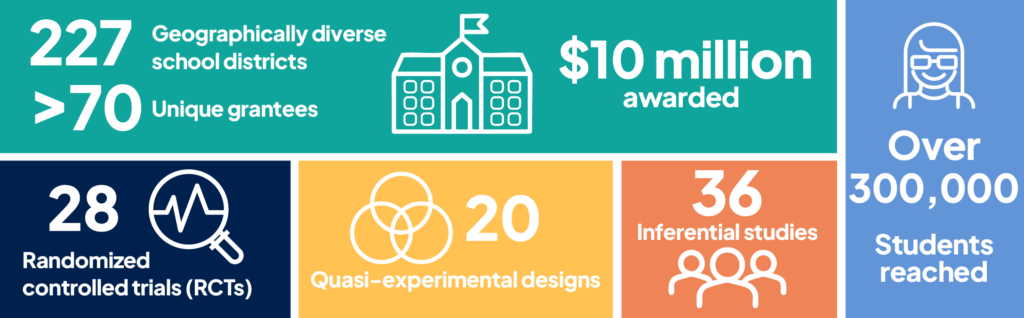
Over the past three years, Accelerate has funded and evaluated tutoring and personalized learning programs across 29 states, supporting more than 300,000 students and nearly 50 rigorous studies, including 28 randomized controlled trials. As the program has matured, Accelerate has raised the bar on research rigor and data consistency, and concentrated resources in areas of greatest need and weakest evidence, such as math and the upper grades.
What the Evidence Tells Us
Virtual tutoring has rounded the corner from “promising” to consistently effective. Students receiving virtual tutoring – live instruction delivered by a human tutor online – produced effects comparable to or exceeding in‐person models, including for older students and in math.
Ensuring alignment between tutoring and core instruction is a key lever for scale and sustainability. Programs that align tutoring with high quality classroom materials report stronger teacher buy-in, more consistent implementation, and fewer challenges reaching intended dosage.
Tutoring is getting more efficient at converting time into student learning. Among programs that yielded significant impacts, they are delivering a month of learning far faster than previous research suggested.
The next frontier isn’t “does it work?”, it’s “which students benefit most, and what does it cost?” We’re learning more about differential impacts and cost-effectiveness, but study designs must evolve to keep pace.